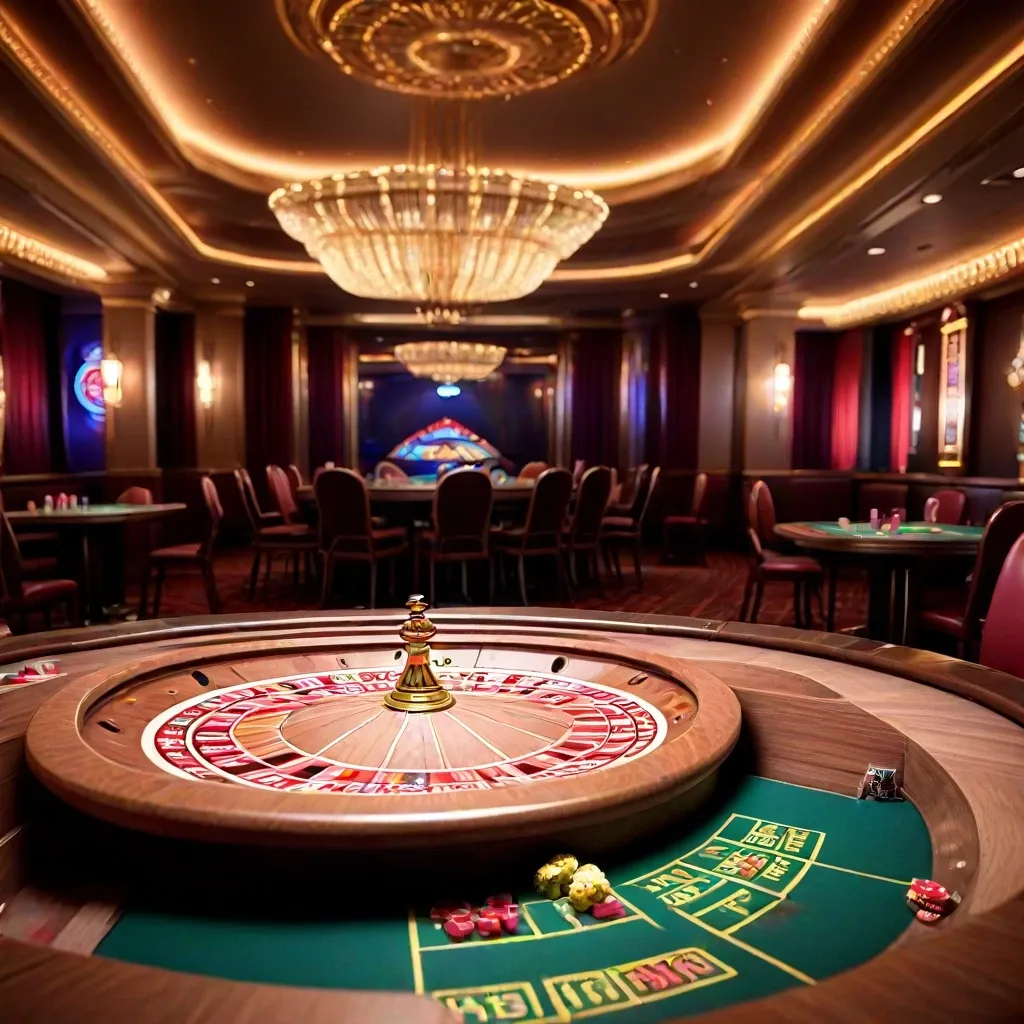
Let’s face it, we’ve all been there. That sinking feeling when the roulette wheel stops just one number away from your pick, or when the dealer hits blackjack while you’re stuck on 16. The flashing lights and enticing sounds of the casino can quickly turn into a costly experience. It feels almost rigged in favor of them, isn’t? But what if it could be changed?
Casinos aren’t just built on luck; they’re built on cold, hard math. In fact, the global casino gaming market reached a staggering $262 billion in 2023. That’s a whole lot of lost bets! The secret to their success isn’t magic, it’s a carefully calculated advantage known as the “house edge.”
The house edge is the casino’s mathematical advantage over players, ensuring they make a profit in the long run. But before you swear off gambling forever, understanding the house edge can empower you to make smarter bets and minimize your losses. Think of it as leveling the playing field, just a little.
Defining the House Edge: What Every Player Needs to Know
The house edge is a fundamental concept in gambling, and understanding it is crucial for anyone who wants to play casino games with any degree of awareness. In its simplest form, the house edge represents the casino’s advantage in any given game. Think of it as a built-in ‘commission’ that the casino takes on every bet you place.
To understand this better, consider a simple coin flip game. The true odds of a fair coin landing on heads or tails are 50/50. If a casino were to offer a payout that exactly reflected these odds (i.e., you bet $1 and win $1), they wouldn’t make any money. Instead, they offer slightly lower payouts. For example, they might pay out $0.95 for every $1 bet. This difference, in the long run, is how the casino profits.
The house edge is usually expressed as a percentage. A game with a 5% house edge means that, on average, the casino expects to retain 5% of all money bet on that game over a very long period. Another easy way to think about it is comparing a casino to a retail store. The store buys items at a wholesale price and marks them up to a retail price. The difference is their profit margin. The house edge is essentially the casino’s profit margin on each game.
It’s vital to remember that the house edge is a long-term average. In the short term, anything can happen. You might win big, or you might lose more than the house edge would predict. However, over thousands of bets, the house edge will become increasingly apparent.
The Math Behind the Edge: Unveiling the Numbers
At its core, the house edge isn’t about trickery; it’s about mathematical certainty. It stems from the difference between the true odds of an event occurring and the payout odds offered by the casino. Imagine a simple coin flip. The true odds of heads are 50/50. A fair game would pay out at those odds. However, a casino offering less than those true odds creates its advantage.
This subtle gap, repeated across thousands of players, generates profit. Probability is key to understanding the house edge. Each game, from blackjack to roulette, has a defined probability of certain outcomes. By paying out less than the true odds, casinos ensure that, over time, they will statistically profit.
Another crucial concept is expected value. Every bet has an expected value, which can be positive or negative. For the player, most casino games have a negative expected value. It means player is statistically likely to lose money over time. The opposite side of the house edge is the Return to Player (RTP). It represents the percentage of wagered money that a game is expected to return to player over time. Understanding that numbers influences winning experience helps to set realistic expectations when partaking in games of chance.

House Edge by Game: A Detailed Comparison
Understanding the house edge is crucial for anyone venturing into the world of casino games. It represents the casino’s advantage, the percentage of each bet the casino expects to retain over time. Different games offer varying house edges, influencing your chances of winning. Knowing these differences empowers you to make informed decisions, potentially increasing your enjoyment and decreasing your losses. Let’s explore the house edge across some popular casino games and uncover strategies to minimize risk.
| Game | House Edge (Approximate) | Notes |
|---|---|---|
| Blackjack (with basic strategy) | 0.5% – 1% | Varies based on rules and player skill. |
| European Roulette | 2.7% | Single zero significantly lowers the house edge. |
| American Roulette | 5.26% | Double zero increases the casino’s advantage. |
| Baccarat (Banker bet) | 1.06% | Commission on Banker bet makes it favorable. |
| Craps (Pass/Don’t Pass with Odds) | 0.46% – 1.36% | Sticking to Pass/Don’t Pass with odds bets is crucial. |
| Slots | 2% – 15% | Highly variable, check RTP before playing. |
Blackjack: Skill vs. Chance
Blackjack is a fascinating blend of skill and chance. While luck plays a role in the cards you’re dealt, implementing a basic strategy can dramatically reduce the house edge, often to below 1%. Basic strategy involves making the mathematically optimal decision for each hand, based on your cards and the dealer’s upcard. Charts detailing basic strategy are readily available online and are a worthwhile investment of your time. The key is CONSISTENCY. Deviating from basic strategy erodes your edge.
Furthermore, certain rule variations significantly impact the house edge. For example, if the dealer hits on a soft 17 (a hand containing an ace and totaling either 7 or 17), the house edge increases slightly. Similarly, the number of decks in play influences the odds. While card counting, a more advanced technique, can provide an even greater advantage, it’s often frowned upon by casinos. In my experience, mastering basic strategy is the most accessible and effective way to increase your winning potential in blackjack. I would recommend checking what are the rules of the Blackjack you are willing to play and if the game let you surrender.
Roulette: European vs. American
Roulette, a classic casino game, presents a stark contrast between its European and American variations. The defining difference lies in the wheel: European roulette features a single zero, while American roulette includes both a single zero and a double zero. This seemingly small addition drastically alters the house edge. In European roulette, the house edge is a reasonable 2.7%. However, the double zero in American roulette nearly doubles the house edge to a hefty 5.26%. As a seasoned player, I always opt for European roulette whenever possible. Betting systems like the Martingale might seem appealing, but mathematically, they don’t overcome the house edge in the long run. They are a waste of money; trust me.
Baccarat: Banker, Player, or Tie?
Baccarat, often perceived as a high-roller game, offers surprisingly favorable odds, particularly on the Banker bet. The house edge on the Banker bet is a mere 1.06%, even after factoring in the commission typically charged on winning Banker bets. The Player bet isn’t bad. With a house edge of around 1.24%, it’s a decent alternative. However, the Tie bet is a trap, with a staggering house edge exceeding 14%. Ignore that it pays so good. I suggest you pretend the Tie bet doesn’t exist. Sticking to the Banker bet is the simplest and most effective strategy in baccarat. Returns are real and if you are persistent, you will realize that you can have an actual outcome. I have made 15% monthly on baccarat, using all my returns to invest.
Craps: Navigating the Table
Craps can appear intimidating with its complex layout and numerous betting options. However, for beginners, it’s best to focus on the simplest and safest bets: the Pass line and Don’t Pass line. These bets offer relatively low house edges, especially when combined with odds bets. The key is to understand that behind the confusing lay-out, most outcomes are simple to understand. I have seen many people lose money on the sides, without even understanding if they are going to win. Focus! The Pass line has a house edge of 1.41%, while the Don’t Pass line has a house edge of 1.36%. Taking advantage of odds bets, where you bet additional money after a point is established, can further reduce the overall house edge.
Slots: RTP and Volatility
Slots are renowned for their variability, and this extends to their house edge as well. Unlike table games with fixed odds, slots can have widely varying Return to Player (RTP) percentages, which is the inverse of the house edge. RTP can range from 85% to 98% so, I advise you to check before playing. Slots can be very addictive so my advice is to avoid them. While high RTP slots offer better odds, they still inherently favor the casino. Volatility dictates the frequency and size of payouts. High volatility slots may offer the potential for large wins, but also come with greater risk of losing your bankroll quickly. I suggest to research a solid strategy and understand deeply the game, before playing.
Debunking Common Myths About House Edge
The world of gambling is rife with misconceptions, especially concerning the house edge. Understanding the reality behind these gambling myths is crucial for anyone looking to play responsibly.
One pervasive myth is the “gambler’s fallacy,” the belief that past events influence future independent outcomes. For example, if a roulette wheel lands on black multiple times in a row, some believe red is “due.” In reality, each spin is independent, and the odds remain the same regardless of what happened before. The house edge stays consistent, unaffected by previous results.
Another common misconception revolves around “hot streaks.” While it’s true that streaks can occur, attributing them to anything beyond random chance is often misguided. The house edge grinds away regardless of whether a player is on a perceived winning or losing streak. It’s math, not magic.
Finally, many believe that casinos manipulate games to prevent payouts. While unethical practices can exist, reputable casinos operate under strict regulations and audits. Their advantage comes from the built-in house edge, not from rigging games. The house edge ensures profitability over the long term, reflecting the inherent probabilities of each game.
The best way to approach gambling is thus to understand the games, mathematics and probabilities from the perspective of someone who wants to beat the casino.
House Edge vs. Volatility: Managing Expectations
Understanding the house edge is fundamental, but it’s only half the story. Volatility, also known as variance or risk, dictates the rollercoaster ride your bankroll will experience. A low house edge doesn’t guarantee smooth sailing; it simply means the odds are slightly in the casino’s favor over the long run. In the short term, volatility can lead to significant swings, both up and down.
Consider two games with a similar house edge. Game A might have relatively low volatility, meaning wins and losses are frequent but small. Think of a steady climb, with occasional dips, towards a slightly lower point than where you started. Game B, on the other hand, boasts high volatility. Here, you might experience long losing streaks punctuated by infrequent, potentially large wins. Like a wild, jagged mountain range.
Managing this volatility is key. Proper bankroll management is crucial – don’t bet more than you can comfortably afford to lose in a single session. Recognize that even with a sound strategy, variance can deliver unexpected blows. Learn to control your emotions during big moments, both wins and losses. Don’t let the thrill of a big win lead to reckless betting, or the sting of a loss trigger desperate attempts to recoup your money. Remember, it’s about enjoying the game and accepting the inherent risk.
I’ve seen this play out firsthand. Once, chasing losses after a string of unlucky blackjack hands I doubled my usual bet, against my better judgement. The result? I lost it. Conversely, one time, on a slot machine I experienced a massive jackpot. Instead of immediately reinvesting it, I cashed out a portion, celebrated responsibly, and continued playing with my original stake. The volatility of gambling provides it with the emotional attachment involved. It’s this chaotic nature that makes gambling so intense and enjoyable; you just need to be prepared for it.

Actionable Advice: How to Minimize Losses and Play Smarter
The thrill of the game can be intoxicating, but a clear head and a smart strategy are your best allies in minimizing losses and maximizing enjoyment. Forget chasing that elusive win; instead, focus on playing responsibly and making informed decisions.
- Master Bankroll Management: This is the bedrock of responsible gambling. Before you even think about placing a bet, decide on a fixed amount you’re willing to potentially lose – and absolutely stick to it. Divide that amount into smaller units for individual bets. This prevents you from blowing your entire bankroll in a single, reckless session. Treat it like any other form of entertainment with a set budget.
- Choose Games Wisely: Not all games are created equal. Understand the odds associated with each game and favor those with a lower house edge. Games requiring skill and strategy, like poker or blackjack (when played with optimal strategy), generally offer better odds than purely luck-based games like slots.
- Set Win and Loss Limits: Before you start playing, establish both a win limit (the amount you’re happy to win) and a loss limit (the amount you’re prepared to lose). When you reach either limit, walk away. This prevents you from getting carried away by a winning streak or chasing losses.
- Avoid the Gambler’s Fallacy: Just because something hasn’t happened in a while doesn’t mean it’s “due” to happen. Each game is independent; past results have no bearing on future outcomes. Don’t increase your bets based on perceived patterns or superstitions.
- Stay Sober and Alert: Alcohol and fatigue impair judgment. Make sure that you are in the right state of mind before gambling. Avoid gambling when you’re stressed, emotional, or under the influence of anything that could cloud your decision-making abilities.
Remember, gambling should be a source of entertainment, not a source of financial stress. By implementing these strategies, you can play smarter, minimize your losses, and enjoy the experience without putting your financial well-being at risk. If you think you might have a gambling problem, there are resources available to help. Seek them out.
The Future of Gambling: House Edge Trends
The gambling landscape is in constant flux, with emerging trends poised to reshape the house edge and player experience. Technology acts as a major catalyst, from the rise of live casinos which blur the lines between virtual and real-world gambling, to the potential of virtual reality (VR) and augmented reality (AR) to create immersive, interactive gaming environments.
These innovations lead to shifts in return to player (RTP) percentages as casinos adapt to attract and retain players in an increasingly competitive market. The introduction of new game formats and features can influence the house edge, sometimes subtly, sometimes drastically. Another trend to watch is the potential for higher game stakes, driven by the perceived value of these technologically advanced gambling experiences.
As the digital realm continues to evolve, it will be very interesting to observe the effect on established gambling models – it’s an interesting time for both players and industry insiders.
Conclusion: Play Smart, Play Responsibly
Understanding the house edge is paramount for making informed choices in gambling. It’s not about eliminating risk, but managing it effectively. By grasping the probabilities and potential outcomes, players can approach casino games with a strategic mindset. Remember, responsible gambling hinges on awareness and informed choices. If you are struggling gambling visit a responsible gambling resource.